Winterizing a Cottage Plumbing System: The Steps in Order and How to Reopen It in Spring
Closing the cottage for the winter is simple when it comes to plumbing: shut off the water supply, drain every pipe, and add antifreeze to the traps. Here are the steps in order, right through to reopening in the spring.
Key points
- 9% more volume : that is how much ice expands as it forms, enough to split pipes and fittings.
- Propylene glycol plumbing antifreeze (RV type) only; never use automotive antifreeze.
- Turn off the circuit breaker before draining the water heater, otherwise the element will burn out when dry.
- More than a month of vacancy : the RBQ recommends a complete flushing upon reopening.
- 60°C at the water heater outlet and well water testing upon reopening.
Why drain all the cottage plumbing?
Because water expands when it freezes, splitting whatever contains it. According to the USGS, ice occupies about 9% more volume than liquid water. Pipes, fittings, and faucet bodies give way under this pressure.
The worst part is that the crack remains invisible all winter. When it thaws, water leaks from the burst pipe, and no one is there to shut off the valve. Water damage can accumulate for days. Discovering warped floors in April is no fun.
Turning down the heat isn't enough. A power outage lasting a few days can freeze a poorly insulated cottage without anyone knowing. Draining the system completely is the only method that doesn't depend on electricity or the weather. For a home heated year-round, we have an article on how to protecting home plumbing from freezing.
Supplies to gather before the final weekend
You don't need many tools, but the right antifreeze is essential. Buy propylene glycol plumbing antifreeze, often sold as RV antifreeze. It is designed for residential water supply systems. Automotive antifreeze contains ethylene glycol, which is toxic, and must never be used in plumbing or drains.
Also, have a garden hose, a bucket, some rags, an adjustable wrench, and a headlamp on hand. Buy plenty of antifreeze, as each trap and toilet bowl requires several cups.
Step 1: Shut off the water at the main or the well
Start at the source. For municipal water, close the main shut-off valve, usually located near the foundation wall or the meter. If you have a well, turn off the pump at the breaker panel.
Without power, it cannot restart during the draining process. Do not disassemble anything on the water intake itself: any modifications at this level should be handled by a licensed plumber.
Step 2: Open all faucets and drain the lines
Open every faucet, both hot and cold, starting from the highest point and working your way down. Air enters from the top and liquid drains by gravity, which empties the pipes almost completely.
Finish with the lowest drain valve in the system, a small faucet near the intake designed to empty the piping. Place the bucket underneath and wait until the last trickle stops. Don't forget the outdoor faucet and the shower, which both have two sides to open. Leave everything open for the winter.
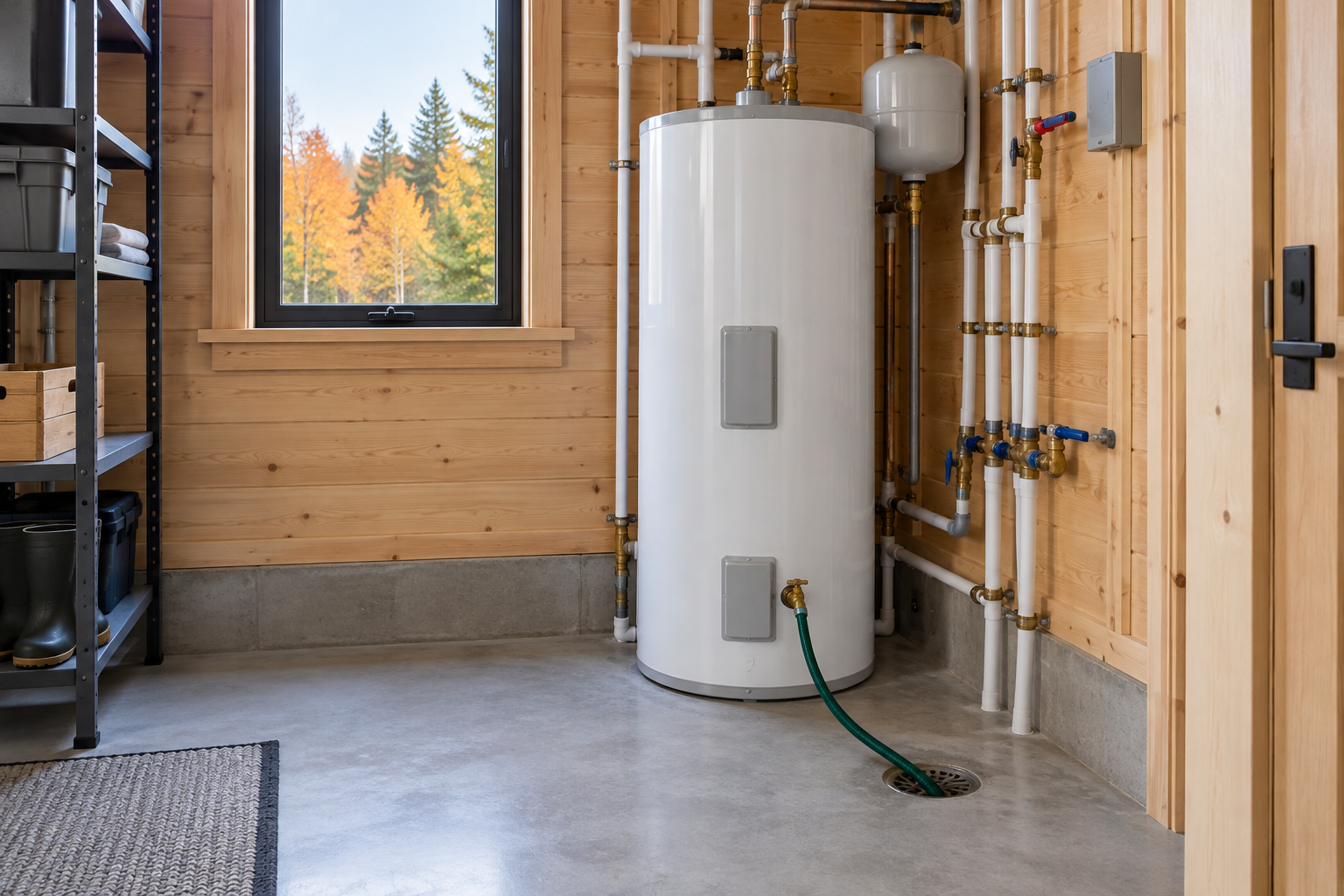
Breaker off, garden hose attached to the drain valve and leading to a drain: the water heater empties without burning out the element.
Step 3: Drain the water heater without burning out the element
Always turn off the water heater's circuit breaker before draining it. Otherwise, the heating element—the resistor submerged in the tank—will heat up while dry as soon as the water level drops, causing it to burn out.
Let the water cool down, as it can cause scalding. Connect the garden hose to the drain valve at the bottom of the tank and run the other end to a drain or outside. Open a hot water faucet upstairs to let air in, then open the drain valve. Leave it open afterward.
Does your water heater run on gas? Call a pro, period. The burner and vent should not be handled lightly. A water heater lasts on average 10 to 12 years, so a drain-down is a good time to have an aging unit evaluated.
Step 4: The well pump and pressure tank
With a well, the system also needs to be drained. The pressure tank is the large cylinder that maintains a pressurized reserve and prevents the pump from starting every time a faucet is opened.
The power has already been turned off since step 1. Connect a hose to the drain valve, direct it toward a drain, and open it. Keep a faucet open upstairs so air can replace the water. Then, drain the unit according to its manual, as many models have a specific drain plug.
The check valve is the component that allows flow in only one direction. In some systems, it holds liquid in the pipe leading down to the well. If you don't know how to drain it, or if your submersible pump worries you, have it inspected before the deep freeze. The same goes for a water filtration system : shut off the inlet and drain the housing according to the manufacturer's instructions.
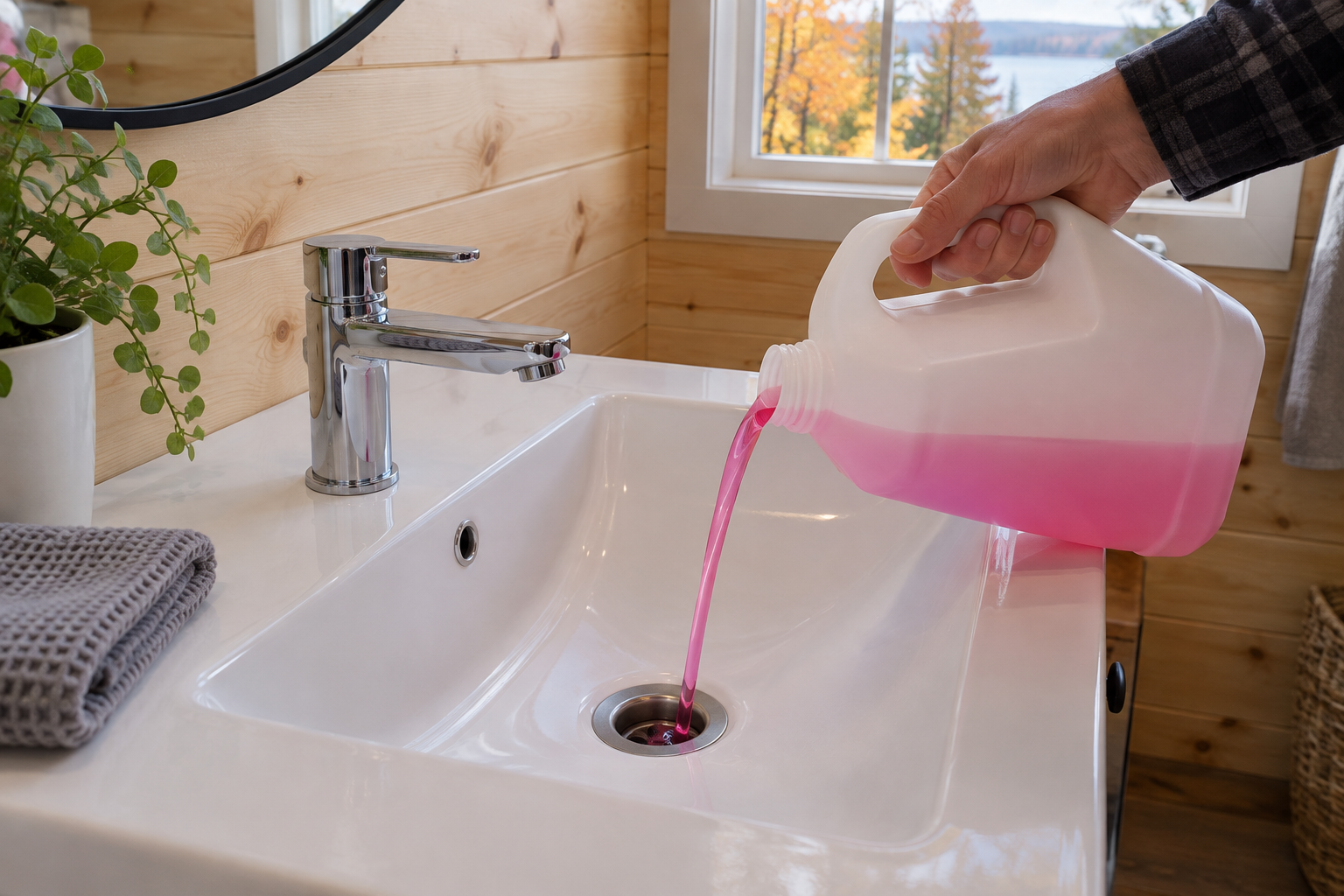
Propylene glycol plumbing antifreeze replaces the water in the P-traps for the winter.
Step 5: Toilets, appliances, and antifreeze in the P-traps
Start with the toilets. Flush, sponge out the bottom of the tank, and then sponge out the bowl. Then, pour antifreeze into the bowl.
Move on to the P-traps. A P-trap is the U-shaped pipe under every drain that holds a small amount of liquid to block odors; this liquid will freeze if left behind. Pour several cups of antifreeze into every P-trap: sinks, showers, tubs, and floor drains. The liquid will displace the water.
Dishwashers and washing machines also hold water in their hoses. Disconnect the inlet hoses, drain them, and sponge out the bottom of the appliances. Leave the doors slightly ajar.
What about compressed air?
It's optional. Blowing low-pressure air through the pipes clears out any remaining pockets of water. However, too much pressure can damage the fittings. If you don't have the equipment or the experience, leave this step to a plumber.
Before locking up: the final check
Go through this list one last time before you leave. It only takes a few minutes.
- Water heater breaker off and well power disconnected.
- Open all faucets, including the drain valve.
- Flush toilets, and protect bowls and traps with antifreeze.
- Drain the dishwasher and washing machine, and disconnect the hoses.
- Post a note at the entrance summarizing what you have drained.
Next, close the windows, seal any visible air leaks, and bring in the patio furniture.
Closing the cottage for winter: the rest of the checklist
Once the plumbing is taken care of, there are a few more closing tasks. They take about an hour and will allow you to leave with peace of mind.
On the electrical side, unplug appliances and empty the refrigerator: remove all food and any bottles that could burst in the cold. Leave the fridge door slightly ajar to prevent mold. If you are keeping the heat on to control humidity, choose a low, constant temperature. Remove the bed sheets and store them in a dry place.
Outside, inspect the roof and gutters, and note any damage that needs to be repaired before the snow falls. In Quebec, many insurance policies for seasonal properties include vacancy conditions: check with your insurer, as requirements vary from one policy to another. This will allow you to ensure your electricity costs and coverage align with your actual usage. When you return, you'll be able to reopen without any unpleasant surprises.
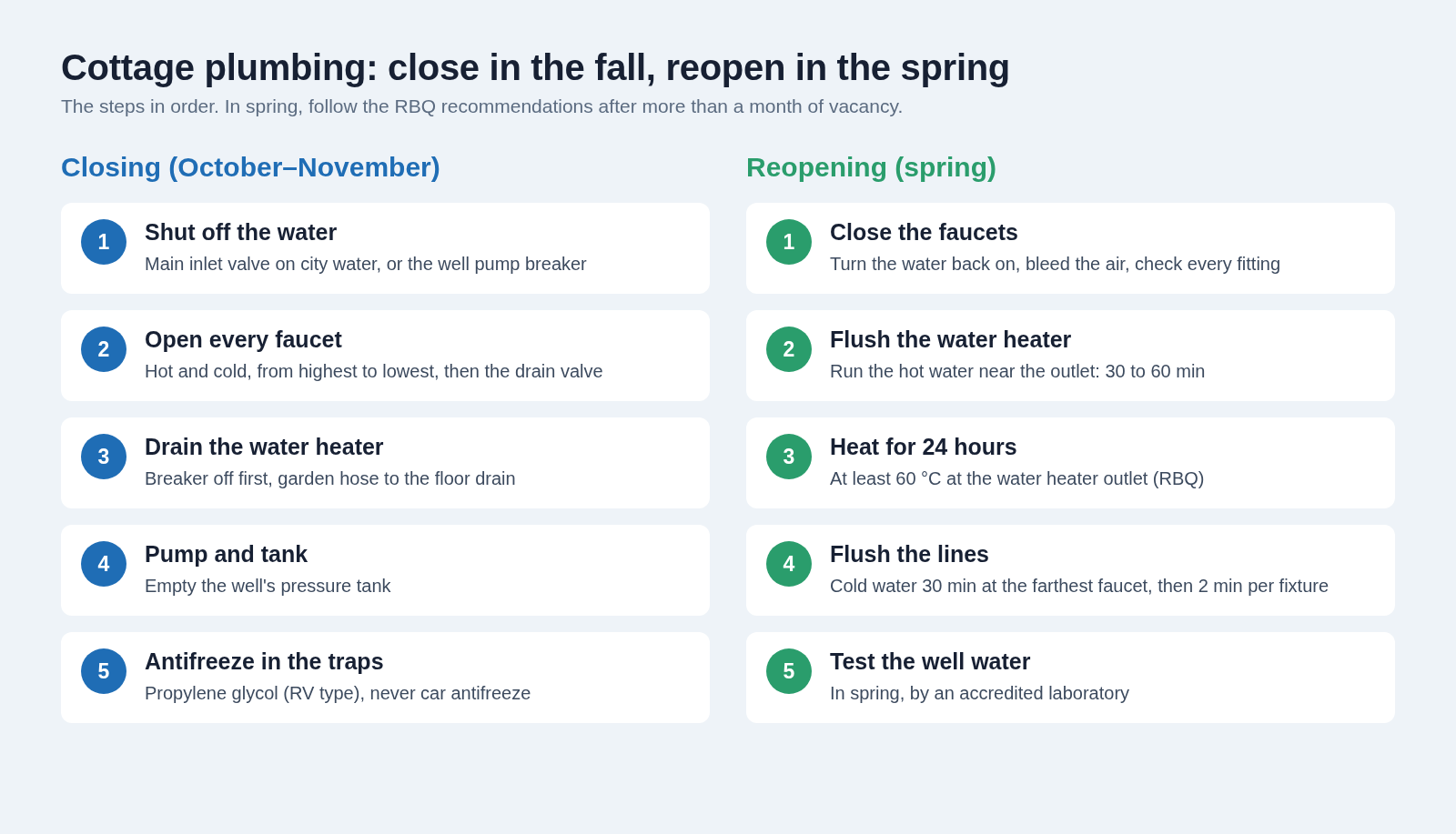
Closing and reopening cottage plumbing, step by step.
In the spring: how do you turn the water back on in the right order?
Proceed in the reverse order of the fall, and more slowly. Close the drain valves, then close all other faucets except for one on an upper floor. Reopen the main intake valve or turn the pump back on, and let the air escape. Check the connections for leaks before proceeding.
The water heater and flushing
According to the RBQ, a building left unoccupied for more than a month experiences water stagnation and a decline in quality. The risk of bacteria, including Legionella pneumophila, increases, especially in hot water systems. Stagnation can also cause lead and copper levels to rise.
Before restarting the water heater, flush the tank by opening a hot water tap near the outlet until the water runs cool. Allow 30 to 60 minutes depending on the capacity. Then, turn the circuit breaker back on and let the hot water run for at least 24 hours. The temperature should reach at least 60 °C at the outlet, which is the standard factory setting.
Next, flush the plumbing system. Run the cold water for at least 30 minutes at the tap furthest from and highest above the main inlet. Do the same with the hot water until it runs hot. Run every other fixture for 2 minutes on cold, then the same on hot. Flush every toilet, clean all aerators and showerheads, and replace the filters. Full system restoration can take 24 to over 48 hours.
Springtime well maintenance
Have your well water tested. The Government of Quebec recommends using an accredited laboratory at least twice a year for microbiological testing, specifically during the spring thaw and in the fall. Chemical contaminants require at least one analysis during the period of use.
If a shock chlorine treatment is necessary, first disconnect your treatment equipment. The Ministry of the Environment
Frequently Asked Questions About Winterizing a Cottage
Get a free quote