French Drain: Operation, Lifespan, and Replacement
Have you noticed dampness in your basement after heavy rain, or did an inspector mention an aging drain when you bought your home? A French drain is an easily forgotten system because it's buried, but its condition directly impacts the health of your foundation. This guide simply explains what it does, how long it lasts, and how to know when it's time to repair or replace it.
Key takeaways
- The French drain protects your foundation by diverting groundwater away from the walls.
- Its useful lifespan mainly depends on the soil type, maintenance, and quality of the original installation.
- Basement dampness, cracks, and musty odors are among the most common signs of a failing drain.
- A camera inspection can often prevent unnecessary excavation.
- Some municipal grants are available for a portion of drainage work in Montreal.
What is a French drain and what does it do
A French drain, also known as a foundation drain, is a perforated pipe installed around the base of a house's foundation. Its role is simple: to collect groundwater before it exerts pressure against the concrete walls, then redirect it to a sump pit, storm sewer, or ditch.
Without this system, water accumulates against the foundation. This pressure, known as hydrostatic pressure, eventually creates cracks and allows moisture to penetrate the basement. The drain therefore acts as a safety valve for the entire building structure. The City of Montreal reminds us that managing water around foundations is one of the basic measures to protect a building from water damage.
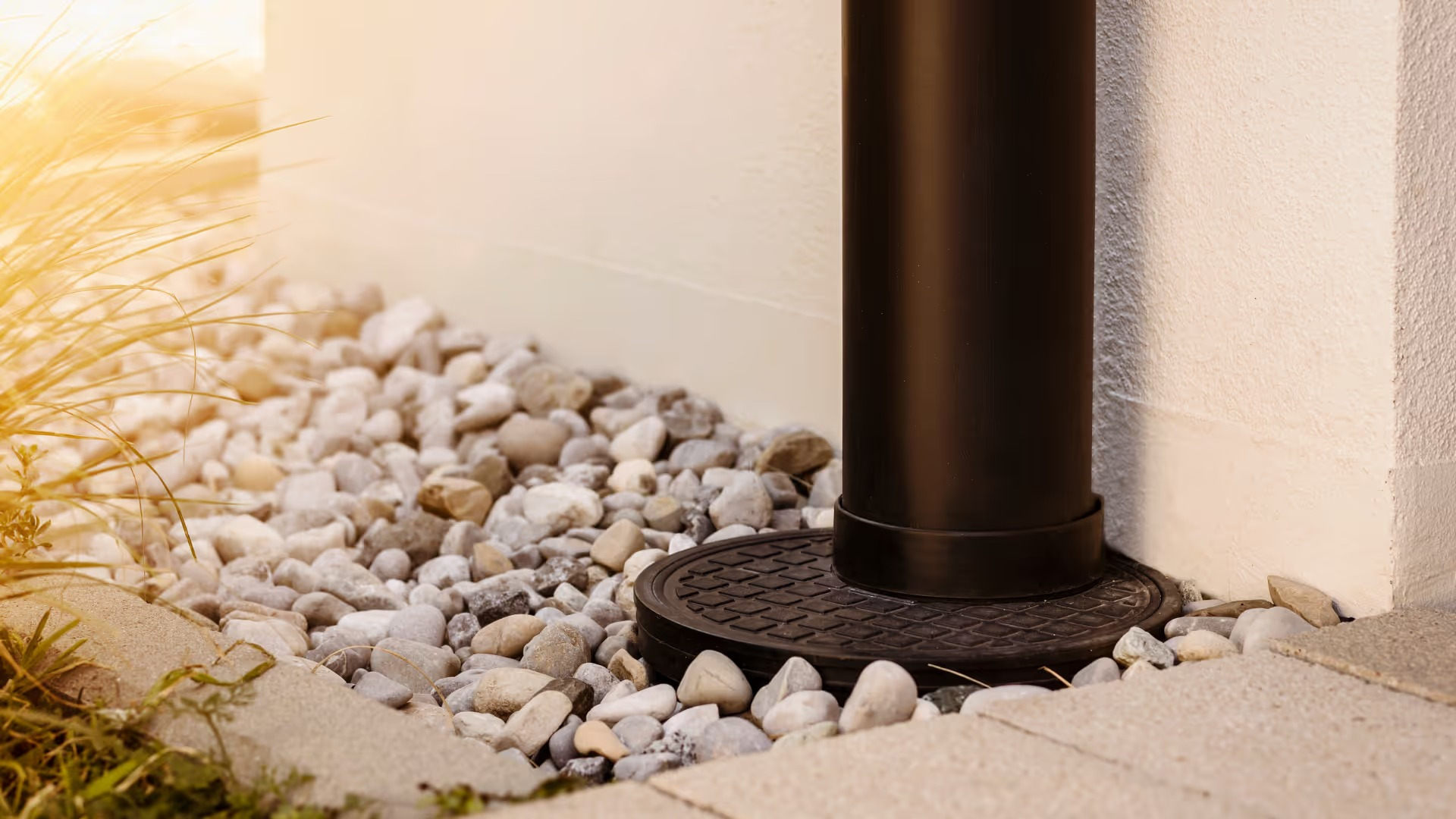
How the system works: drain, membrane, crushed stone
The system relies on three elements that work together. The perforated pipe, usually made of rigid or flexible PVC, is laid at the base of the foundations with a slight slope towards the drainage point. It is surrounded bya layer of crushed stone which prevents soil from clogging it while facilitating water collection. A geotextile membrane then separates this stone from the backfill to limit the accumulation of fine sediments over time.
When one of these three elements is poorly installed or degraded, the efficiency of the entire system decreases, even if the pipe itself still appears to be in good condition. This is why a complete inspection takes into account both the pipe and its immediate environment.
Why all basements in Quebec need one
Quebec's climate combines often clayey soils, groundwater levels that vary seasonally, and repeated freeze-thaw cycles each year. This combination increases the amount of water that accumulates around foundations, especially in spring during snowmelt and during increasingly frequent heavy rainfall events.
The City of Montreal points out that the frequency and intensity of violent storms and torrential rains are increasing every year, putting increased pressure on both residential and municipal drainage systems. A functional French drain is therefore not a luxury: it's a basic protection against humidity, cracks, and indoor air quality issues related to mold.
Typical Lifespan (and factors that shorten it)
A well-installed French drain generally lasts several decades, but no system is eternal. Its longevity depends on a set of concrete factors. The type of soil matters greatly: clayey, sandy, or marked by the presence of iron ochre, each context imposes its own constraints. The quality of the original installation, particularly the presence of a separation membrane, also plays a decisive role, as does the regularity of maintenance and inspections over the years.
The age of the house also comes into play, since the original material—concrete, terracotta, or PVC—does not offer the same resistance over time. The proximity of mature tree roots can also accelerate the system's wear and tear.
A drain that has never been inspected can become partially obstructed well before the end of its theoretical lifespan, simply due to the accumulation of fine sediment in the crushed stone.
6 Signs Your French Drain Is No Longer Working
Here are the signs most commonly indicating that a foundation drain needs attention:
- Water visible in the basement after heavy rains or snowmelt
- Persistent earthy or musty smell
- Efflorescence, a white powder that appears on concrete walls
- Constant humidity despite a dehumidifier running non-stop
- Cracks appearing or widening in foundation walls
- Soil subsidence or standing water puddles near exterior walls
A single one of these signs doesn't automatically mean your drain is at the end of its life, but their combination warrants a professional inspection.
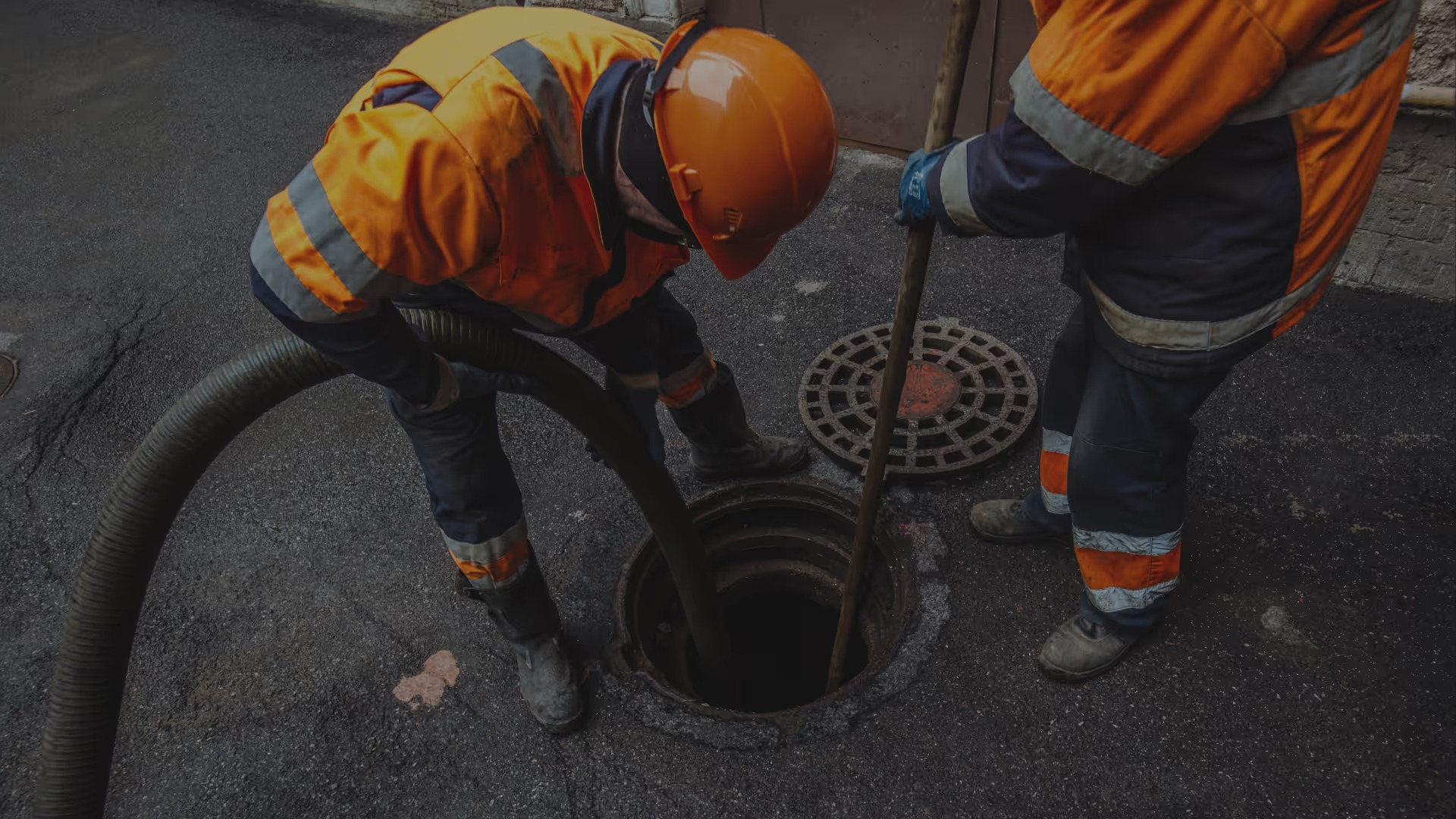
Water infiltration: drain or foundation crack?
The drain isn't always the cause when water appears in the basement. A crack in the foundation wall can let surface water pass through even if the drain is still working correctly, especially if the ground slope directs water towards the house rather than away from it.
Conversely, a clogged or collapsed drain can create enough pressure to cause new cracks. The two problems are therefore often linked, which makes a professional assessment useful before concluding that the entire system needs to be replaced.
Camera inspection: what it reveals
Camera inspection is the step that allows confirming the actual condition of the drain without excavating. A flexible camera is inserted into the pipe to reveal collapsed or crushed sections, obstructions from sediment, mud, or roots, dislodged joints or localized breaks, as well as the general condition of the pipe based on its age and material.
This step often avoids a complete excavation avoiding unnecessary work by pinpointing the exact location of the problem, which then allows you to choose between a localized repair or a more extensive replacement.
Localized Repair vs. Full Replacement
Once the diagnosis is made, two options are possible depending on the extent of the problem:
A localized repair generally costs less and causes less disruption to the property, but it doesn't solve a problem affecting the entire perimeter of the foundation.
Average Cost of a Replacement in Montreal and the North Shore
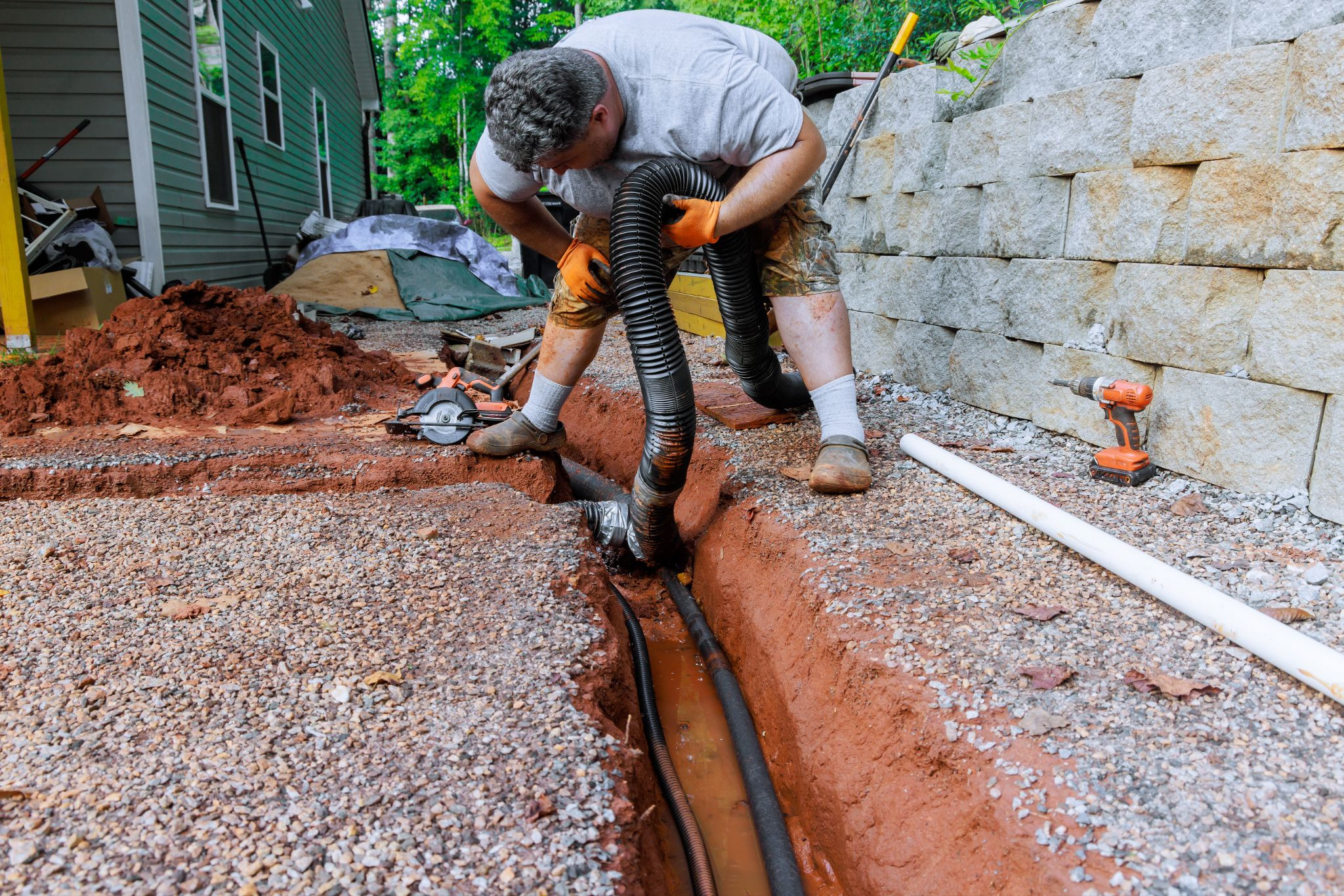
The cost of a French drain replacement varies depending on several factors, including property accessibility, foundation depth, the presence of landscaping or a patio that needs to be removed, and the total length of the perimeter to be excavated.
In Montreal and on the North Shore, the size and shape of the building significantly impact the cost. The more corners there are, the more complex the excavation becomes. The need to break up an existing concrete slab, the presence of iron ochre (which sometimes requires a drain compliant with a reinforced standard), and the addition of a waterproofing membrane during the work also affect the final price. A qualified excavation contractor can provide a precise estimate after an on-site inspection, ideally preceded by a camera inspection to confirm the actual scope of work required.
Applicable Municipal Subsidies
Some municipalities offer financial assistance for residential drainage work. In Montreal, the RénoPlex program provides a subsidy for installing or replacing an interior or exterior foundation drain, at a rate of $60 per linear meter. Separate amounts also exist for the installation of a retention pit and a pump system, or for the installation of backwater valves.
These grants are often part of a broader flood protection initiative, as the foundation drain, retention pit, and backwater valves work together to keep a basement dry. Since each borough or municipality has its own eligibility criteria, it is recommended to check directly with your city before undertaking the work. To learn more about excavation work associated with a replacement, consult our page excavation.
What to know before taking action
A French drain in good condition is one of the most important, yet most discreet, systems in a Quebec home. Most problems develop slowly, allowing time to act before the situation worsens. A camera inspection remains the most reliable way to know exactly what's happening underground without having to excavate blindly. Whether your situation requires a simple localized repair or a complete replacement, understanding the available options allows you to make an informed decision, without rushing.
If you're unsure how to correctly interpret the signs you're seeing at home, our team can help you understand your situation and determine the next steps.
Contact us to learn more about our French drain to learn more about our approach.
Frequently Asked Questions
Get a free quote